
NASA Moon Base Challenge Inspires STEM Learning in Miami
Designing a robot for the Moon means deciding how it will move, how much energy it needs and what happens if a part fails. NASA is asking students to take on problems like these through its Moon Base Student Challenge. For young people learning STEM in Miami, the invitation connects classroom knowledge with the work of space exploration. [1, 6]
The competition offers up to $1 million in total monetary awards across multiple teams and award levels, subject to the official rules, available funding and NASA approval. Eligible high school and postsecondary teams can contribute concepts for a future lunar base, and prior specialized engineering experience is not required. Registration closes January 25, 2027. [1, 2, 3]
How AMCAI and AHSA teach STEM in Miami
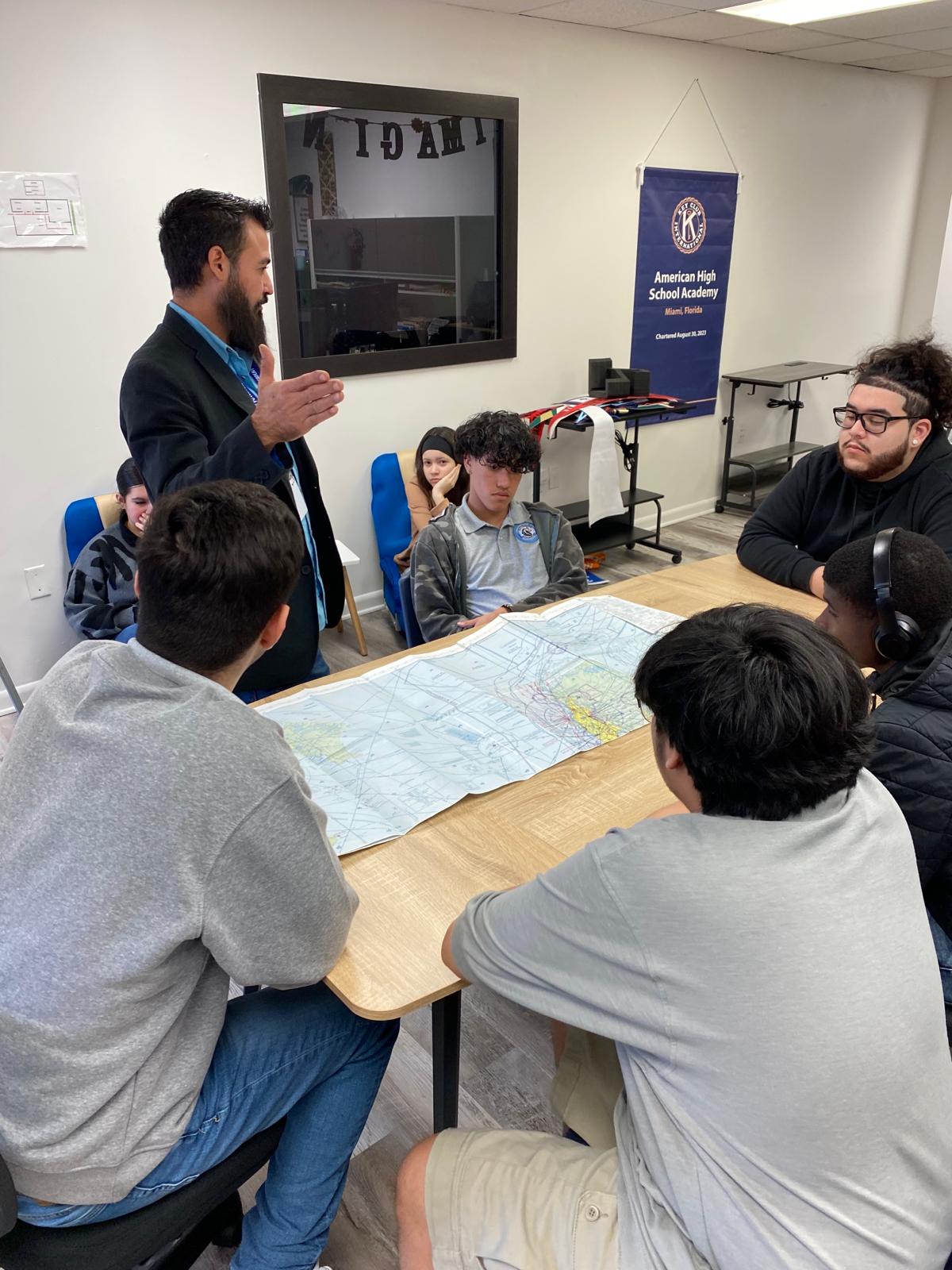
At AMCAI and American High School Academy (AHSA), we connect science, technology, engineering and mathematics with projects students can investigate themselves. AMCAI sponsors two STEM Labs at AHSA’s Miami locations, where students develop designs, test ideas, operate equipment and collect data. A project gives students something concrete to question, measure and improve. [7]
In aviation, that connection begins with understanding how an aircraft works. AHSA’s four-year STEM Aviation and Aerospace Magnet Program uses the AOPA Foundation’s You Can Fly curriculum, with Pilot and Unmanned Aircraft Systems pathways. Students progress from engineering design and forces of flight to aircraft systems, flight planning or drone operations, and a senior capstone. Physics and mathematics become tools for making technical decisions. [8]
Robotics and engineering projects make the design process visible. AMCAI STEM Labs include coding, AI, computer-aided design, 3D printing, electronics and sensors. A student can change a design, test the result and explain what improved. When something fails, the next task is to trace the cause and decide what to try next. That process gives experimentation a purpose. [7]
Maritime learning brings the same approach to South Florida’s waters. Through ACMI, AMCAI’s maritime program, students explore marine navigation, maritime engineering, artificial reef design and simulated oil-spill response. Everglades and Biscayne Bay learning connects environmental science with places students can recognize. These projects connect technical decisions with their effects on people and ecosystems. [10]
Learning also reaches beyond the lab. AMCAI’s Aero Club offers qualifying students in grades 6–12 opportunities such as flight simulation, discovery flights, mentorship and airport visits at no charge. AHSA’s after-school STEM program combines robotics, aviation, drones and flight simulators with academic support for grades 6–12. [9, 11]
AHSA serves families through its Kendall and South Miami campus and its North Campus at Miami Dade College North, serving Hialeah and North Miami. Eligible students can also explore dual enrollment with Miami Dade College and the University of South Florida while completing high school, subject to the partner institutions’ requirements. [12, 13]
Bringing those skills to the NASA Moon Base Challenge
NASA’s challenge gives students six areas to investigate. These examples offer starting points for discussion; teams should use the official technical resources to guide their proposals. [6]
| Challenge area | A problem students could explore |
|---|---|
| Power generation and storage | Keeping essential equipment powered |
| Habitat construction | Using lunar materials to help protect a habitat |
| Life-support systems | Recovering and reusing water |
| Surface mobility | Moving supplies across uneven lunar terrain |
| Communications networks | Keeping explorers and equipment connected |
| Astronaut safety | Reducing exposure to lunar dust |
Who can enter and what teams will create
Teams need two to five students and an eligible adult coach. Eligible affiliations can include private and public high schools, homeschool groups, CTE programs and qualifying educational nonprofits. Postsecondary institutions must meet specific eligibility criteria. International students must satisfy the full-time enrollment requirements. Families and educators should review all age, enrollment and other conditions in the official rules. [3]
Teams begin with a five-to-seven-page Concept Overview Paper, excluding the cover and references. Advanced design software and physical prototypes are optional. Selected finalists develop a recorded pitch and presentation slides for NASA and space industry judges. Submissions must reflect students’ work, and permitted AI assistance must be disclosed. [3, 4]
Dates students and families should know
| Milestone | Scheduled date |
|---|---|
| Registration closes | January 25, 2027 |
| Initial project submission | February 22, 2027 |
| Finalist submission | April 19, 2027 |
| Awards announcement | May 6, 2027 |
Check the official timeline for updates before planning submissions. [5]
Start with a problem worth solving
Start with a sketch and one carefully defined problem. Identify what your idea needs, what could fail and why your solution could work. Bring together teammates with different strengths and make the reasoning clear.
Explore AMCAI STEM Labs and AHSA’s aviation and aerospace program. Families can call (305) 270-1440 or email admin@amcai.org to ask about current STEM opportunities. For competition rules and registration, visit MoonBaseChallenge.org.
Sources
Admissions or Program Questions?
We're Here to Help!

Most students are referred to American High School Academy by their home school district. However, students and family members can contact us directly to learn more or to enroll in our programs.
Contact us Monday - Friday from 9:00 am - 5:00 pm or use our online form to request an appointment to speak with an Admissions Advisor.